When pharmaceutical organizations are forced to revisit product packaging after completion, the impact is rarely minor and often carries significant consequences. Lost materials, wasted time, missed market windows, and strained internal resources all add up quickly. In some cases, the financial impact reaches into the millions. Packaging rework, when executed correctly, can recover product, restore compliance, and preserve both timelines and revenue.
When Small Errors Become Big Problems
Pharmaceutical packaging is an intricate process that brings together multiple components, each of which must meet strict regulatory and quality standards. Labels must be accurate and properly placed. Inserts must reflect the most current approved language. Serialization data must align across every unit, case, and pallet.
A late-stage regulatory update may require a labeling change. A printing error may go unnoticed until after packaging is complete. Serialization data inconsistencies can quarantine product indefinitely, preventing distribution. Without a viable rework strategy, companies are faced with delaying critical timelines, resulting in costly decisions.
The True Value of Rework
Packaging rework provides an alternative path. Instead of viewing a compromised batch as unusable, rework allows companies to correct issues and bring products back into compliance.
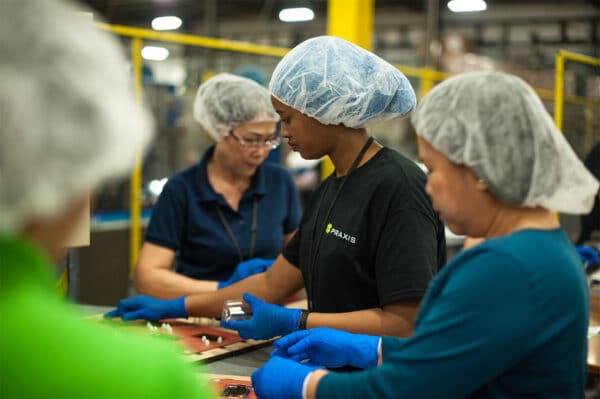
This can take many forms. Labels can be removed and replaced with updated versions. Cartons can be reopened to swap out inserts. Units can be inspected to ensure consistency and quality. Serialization errors and exceptions can be addressed through serialization and aggregation rework processes. The value of these interventions is not limited to cost savings, although that alone can be substantial. Rework also protects timelines.
In an industry where delays can impact product launches and patient access, the ability to recover product quickly is often just as important as the financial recovery itself.
In many cases, rework is the difference between staying on track and starting over.
Why Rework Requires a Different Kind of Partner
While the concept of rework is straightforward, execution is anything but. Correcting packaging issues at scale requires a combination of precision, flexibility, and labor capacity that many organizations are not equipped to handle internally.
Automated systems, which are highly effective for standardized production, are often less suited to the variability and complexity of rework scenarios. Removing labels without damaging packaging, replacing inserts across thousands of units, or performing detailed inspections on mixed batches demands a more adaptable approach.
This is where experienced contract packaging partners play a critical role. Facilities that combine structured processes with a large, skilled workforce are uniquely positioned to handle rework efficiently.
They can scale manual operations as needed, respond quickly to urgent situations, and maintain the quality standards required for regulated products.
Just as importantly, they understand the nuances of compliance. Rework is not simply about fixing a problem. It is about doing so in a way that meets regulatory expectations, maintains product integrity, and ensures that every unit leaving the facility is fully compliant.
Rework as a Strategic Capability
Despite its importance, rework is often treated as a reactive service rather than a strategic capability. Many organizations do not plan for it until they are forced to. By that point, options may be limited and timelines compressed.
Forward-thinking companies are beginning to take a different approach. They are evaluating packaging partners not only on their ability to execute primary and secondary packaging, but also on their ability to respond when something goes wrong.
This shift reflects a broader understanding of risk management in pharmaceutical operations, and how potential errors are handled can determine the overall impact on the business.
By incorporating rework into their broader packaging strategy, companies can reduce risk, improve resilience, and protect both their products and their timelines.
Turning Setbacks into Solutions
No organization plans for packaging errors, but every organization must be prepared to address them. The ability to recover product, correct issues, and move forward without starting from scratch is a powerful advantage in a highly competitive and tightly regulated industry.
Packaging rework transforms what would otherwise be a loss into an opportunity for recovery. It allows companies to maintain momentum, preserve value, and meet their commitments without unnecessary disruption.
In an environment where pharmaceutical supply chain resilience matters more than ever, a contract packaging partner that offers rework and inspection solutions is essential.